
Monkeys matter – how to co-exist peacefully with our wildlife
In Durban and surrounding areas, vervet monkeys are a familiar sight. While some residents enjoy watching their antics, others see them as a nuisance – especially when they invade homes, raid kitchens, or scatter rubbish across the yard. But harming any animal is not permitted and can lead to cruelty charges under the APA.
We built in their home
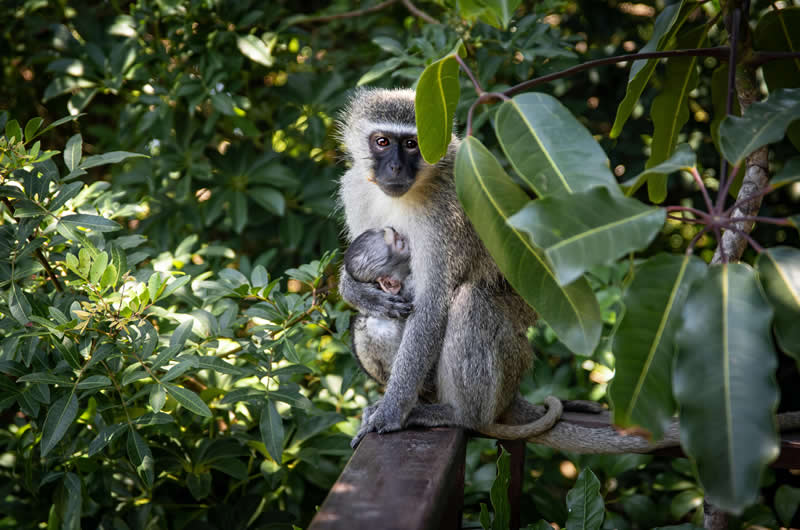
Vervet monkeys are not pests. They are wild animals adapting to survival in an urbanised world. As humans continue to expand into natural habitats, wildlife such as monkeys are forced to adapt. They don’t understand property lines or neighbourhood rules. They are simply doing what any creature would: searching for food and shelter for themselves and their young.
We urge the public to show compassion and patience. Wild animals deserve respect and kindness, even when their behaviour may be inconvenient. Instead of blaming the animals, we encourage you to take simple preventative steps to discourage unwanted monkey visits.
Never, ever feed monkeys – or any other wildlife
All wild animals are opportunistic by nature, and will choose food that is easily available over that which takes more time and effort to find. Many kind-hearted people feel obligated to provide food for the monkeys, believing that humans have destroyed their habitats and that, without help, they would not survive.
In fact, many suburban gardens offer a plentiful supply of natural food – including fruits, berries, leaves and young shoots, bark, flowers, bulbs, roots, and grass seeds. Although mainly vegetarian, vervet monkeys also eat insects, baby birds, birds’ eggs and grubs.
They really are quite capable of finding sufficient food for themselves!
Feeding wildlife not only encourages dependence, but can also lead to unnatural or aggressive behaviour. Monkeys that associate humans with food are less likely to keep their distance, and may well get bold enough to snatch a sandwich from your child’s hand.
Peaceful co-existence is the goal
Here are some practical tips to reduce conflict without hurting monkeys.
- Keep food out of sight – especially near open windows, kitchen counters, or tables. Once they become aware that there is food in the house, they will try to get it.
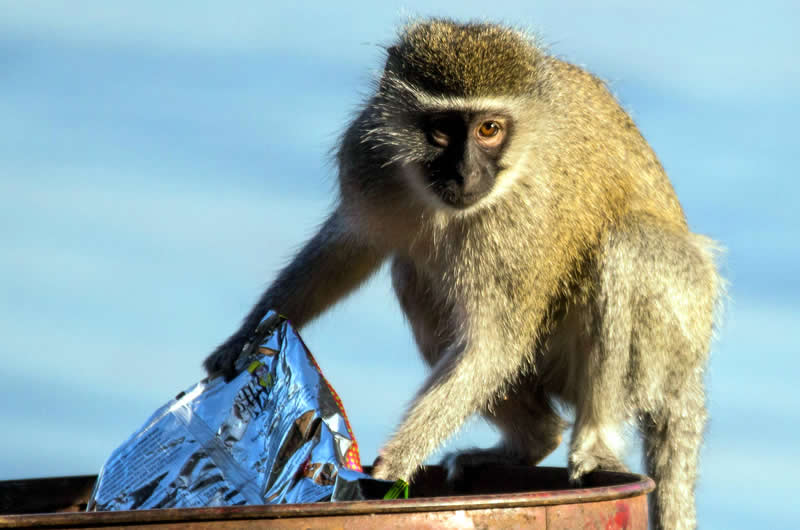
- Secure your bins with tight-fitting lids or place them inside a monkey-proof enclosure.
- Monkey proof your home by installing netting, insect screens or burglar bars to prevent them from gaining entry. If you find a monkey in your house, make sure it can escape without being cornered.
- Protect vegetable gardens with wire fencing, including a roof, to keep monkeys out.
- Train your dogs not to chase or bark at monkeys. A cornered monkey can inflict severe injury. Rather call your dogs to sit beside you or take them inside while the monkeys are in your garden.
- Avoid leaving dog food outside all day.
When monkeys find no reward, they are far less likely to return.
No excuse for cruelty
Whilst some people feel frustration when monkeys cause damage or mess, cruelty is never the answer. If you need to deter monkeys, try spraying them with water from a hosepipe or water spray bottle.
The Durban & Coast SPCA is opposed to the manufacture, sale and use of all snares, traps, harmful substances, or any method of animal control that causes pain, suffering or distress. Harming a monkey – or any animal – is not only unethical, it is also against the law.
All animals are protected under the Animals Protection Act (APA) No. 71 of 1962, which recognises that animals are sentient beings capable of feeling pain and distress. Violations can result in fines of up to R120,000 and/or three years in prison.
Is cruelty towards monkeys a problem in Durban?
Sadly, yes. Whether through intentional harm or negligent behaviour, animal cruelty remains a persistent issue we deal with every day – and monkeys are no exception. The SPCA continues to advocate for justice for all animals and is committed to educating the public about humane, effective ways to coexist with wildlife.
Please report cruelty
If you see someone hurting a monkey or any animal, or come across a snare or trap, please report it immediately. You can reach us on 031 579 6501.
Together, we can create a community that values every creature – wild or domestic – and strives to live in harmony with the animals who share our environment.
share this on social media



STAY INFORMED
Sign up here for the latest animal ‘mews’ – delivered straight to your mailbox!
YOU MAY ALSO ENJOY
Why is my dog vomiting? Dr Gilson explains when to worry and when to see a vet
Why is my dog vomiting? Dr Gilson explains when to worry and when to see a vet As a veterinarian, vomiting is one of the most common reasons I see dogs brought into the clinic. Sometimes it's something relatively minor that resolves on its own. But at other times, it...
Has your dog or cat eaten cannabis? Here’s what Dr Gilson wants you to know
Has Your Dog or Cat Eaten Cannabis? Here’s What Dr Gilson Wants You to Know As a veterinarian, I’ve treated more cases of cannabis ingestion in pets than many people realise – especially since its legalisation in South Africa. What makes these cases particularly...
Snakes in the city – why you shouldn’t kill them, and how to keep your pets safe
Snakes in the city – why you shouldn’t kill them, and how to keep your pets safe Summer time is snake time in Durban. Rain and warm weather – along with a plentiful supply of skinks, geckos and frogs – bring snakes out of their hiding places to bask in the sun and...
Why your application to adopt an animal from us might be turned down – and why it’s okay
Why your application to adopt an animal from us might be turned down – and why it’s okay At the Durban & Coast SPCA, we believe every animal deserves a second chance – a chance at a safe, loving, and permanent home. So, it’s no surprise that many people assume...
Surrendering a pet to the SPCA: what you need to know
Surrendering a pet to the SPCA: what you need to know Surrendering a pet is never an easy decision. At the Durban & Coast SPCA, we understand that circumstances can change, making it difficult for some pet owners to continue caring for their animals....

Pet euthanasia at the SPCA – the difficult choice
Pet euthanasia at the SPCA - the difficult choice Euthanasia is one of the most heartbreaking but necessary responsibilities of the Durban & Coast SPCA. No one wants to put a healthy animal to sleep. But the pet overpopulation, coupled with a shortage of...
Pet-friendly holidays in Durban: where to stay, play and dine with your furry friend
Pet-friendly holidays in Durban: where to stay, play and dine with your furry friend Durban, with its warm climate and scenic coastline, is a fantastic destination for petlovers. If you’re planning a summer holiday at the beach, you’ll find plenty of placesthat...
Hardy, healthy cross-breeds rule!
Hardy, healthy cross-breeds rule! Cross-breeds … mongrels … mutts – dogs with mixed parentage are universally seen as far less desirable and valued than purebred dogs. And yet, they can be just as loveable, friendly and loyal, with none of the health issues...
Why does the SPCA charge an adoption fee?
Why does the SPCA charge an adoption fee? Adopting a pet from an animal shelter is one of the most rewarding decisions you can make. Apart from acquiring a new furry friend, you have the satisfaction of knowing you’ve saved their life and given them a second...
Vaccination schedule for puppies and kittens
Vaccination schedule for puppies and kittens Vaccinations are crucial to protect pets against serious diseases, some of which can be transferred to humans. And when it comes to vaccinating your pets against these diseases, it’s a case of the sooner the better!...