
Why is my dog vomiting? Dr Gilson explains when to worry and when to see a vet
As a veterinarian, vomiting is one of the most common reasons I see dogs brought into the clinic. Sometimes it’s something relatively minor that resolves on its own. But at other times, it can be the first sign of a serious medical condition that requires urgent treatment.
One of the challenges in diagnosing vomiting is that it can have many different causes. I’ve treated dogs that vomited after scavenging food from a rubbish bin, puppies that have a half-chewed sock or other foreign object stuck down their throat, and older dogs whose vomiting was linked to underlying diseases affecting their organs.
The important thing to remember is that not all vomiting is an emergency. But it is essential to know when it may indicate something more serious.

Common reasons dogs vomit
Dogs are naturally curious and may be sick after eating something they shouldn’t. Some dogs deliberately make themselves vomit by swallowing grass when they feel nauseous. The grass tickles their throat, triggering the retch reflex.
Some of the more common causes of vomiting include:
- Eating spoiled food or scavenging in the rubbish
- Sudden changes in diet
- Eating too quickly, or too much
- Food allergies or sensitivities
- Intestinal parasites
- Viral or bacterial infections
- Swallowing foreign objects such as toys, socks, bones, or plastic
- Exposure to toxins
- Pancreatitis
- Kidney or liver disease
- Certain cancers, particularly in older dogs
In many cases, a single episode of vomiting may not be cause for concern, especially if your dog otherwise appears bright, alert, and active.
When you can monitor your dog at home
If your dog vomits once and then returns to normal behaviour, eating, drinking, and interacting as usual, careful monitoring may be all that’s needed.
Keep an eye on their:
- energy levels
- appetite
- water intake
- any further vomiting
- stool consistency
Ensure fresh water is always available and avoid offering rich treats or table scraps.
However, if vomiting continues or your dog’s demeanour changes, it’s time to seek veterinary advice.
Signs that should never be ignored
There are certain situations where I recommend contacting your veterinarian immediately.
Please seek veterinary attention if your dog:
- Vomits repeatedly within a short period
- Cannot keep water down
- Appears lethargic or weak
- Has diarrhoea alongside vomiting
- Has blood in the vomit and diarrhoea
- Has a swollen or painful abdomen
- Is struggling to breathe
- Has eaten something toxic
- May have swallowed a foreign object
- Is a puppy, senior dog, or has an existing medical condition
Repeated vomiting can quickly lead to dehydration, especially in young puppies and elderly dogs.
What if my dog is vomiting yellow foam?
This is a question I hear frequently.
Yellow foam or liquid is usually bile, a digestive fluid produced by the liver. Sometimes dogs vomit bile when their stomach has been empty for a long period, particularly first thing in the morning.
Occasional bile vomiting may not be serious, but if it happens regularly or is accompanied by other symptoms, it should be investigated.
When vomiting becomes an emergency
One condition that worries veterinarians is gastric dilatation-volvulus (GDV), commonly known as bloat. Dogs with bloat may:
- attempt to vomit but produce little or nothing
- have a swollen abdomen
- pace or appear restless
- salivate excessively
- show signs of distress
This is a life-threatening emergency that requires immediate veterinary treatment.
Similarly, dogs that have swallowed foreign objects may develop an intestinal blockage, which often causes persistent vomiting and severe discomfort.
The sooner these conditions are diagnosed, the better the outcome.
What to expect at the veterinary clinic
When a vomiting dog arrives at our primary healthcare clinic, the first thing we do is try to determine the underlying cause. This may involve:
- a physical examination
- blood tests
- faecal testing
A private veterinary clinic may also carry out X-rays and an ultrasound examination.
Treatment depends on the diagnosis and may include anti-nausea medication, fluid therapy, dietary management, parasite treatment, or surgery in more serious cases.

How to prevent vomiting
While not every case can be prevented, there are a few simple steps that can reduce the risk:
- Keep rubbish bins securely closed
- Avoid feeding table scraps
- Introduce new foods gradually
- Keep toxic substances out of reach
- Supervise dogs that chew or swallow non-food items
- Ensure routine deworming is up to date
- Schedule regular veterinary check-ups
Prevention is often far easier and less costly than treating an advanced illness.
Final thoughts
Vomiting is one of those symptoms that can range from mild to life-threatening. While a single episode may not always be cause for concern, repeated vomiting or any signs that your dog is unwell should not be ignored.
As veterinarians, we’d always rather assess a dog early than see them once they’ve become seriously dehydrated or critically ill.
If you’re unsure whether your dog’s vomiting is serious, contact your veterinarian for advice. Trust your instincts – you know your pet better than anyone, and acting quickly can make all the difference.
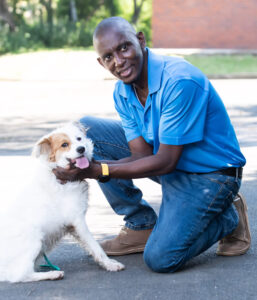 Dr Gilson Muchopa has been in practise for 22 years – the past 12 of which he has served as Controlling Veterinarian at the Durban & Coast SPCA.
Watch this space for more tips from Dr G. If you have specific questions for our vet, please email marketing@spcadbn.org.za
share this on social media



STAY INFORMED
Sign up here for the latest animal ‘mews’ – delivered straight to your mailbox!
YOU MAY ALSO ENJOY
Has your dog or cat eaten cannabis? Here’s what Dr Gilson wants you to know
Has Your Dog or Cat Eaten Cannabis? Here’s What Dr Gilson Wants You to Know As a veterinarian, I’ve treated more cases of cannabis ingestion in pets than many people realise – especially since its legalisation in South Africa. What makes these cases particularly...
Snakes in the city – why you shouldn’t kill them, and how to keep your pets safe
Snakes in the city – why you shouldn’t kill them, and how to keep your pets safe Summer time is snake time in Durban. Rain and warm weather – along with a plentiful supply of skinks, geckos and frogs – bring snakes out of their hiding places to bask in the sun and...
Why your application to adopt an animal from us might be turned down – and why it’s okay
Why your application to adopt an animal from us might be turned down – and why it’s okay At the Durban & Coast SPCA, we believe every animal deserves a second chance – a chance at a safe, loving, and permanent home. So, it’s no surprise that many people assume...

Monkeys matter – how to co-exist peacefully with our wildlife
Monkeys matter - how to co-exist peacefully with our wildlife In Durban and surrounding areas, vervet monkeys are a familiar sight. While some residents enjoy watching their antics, others see them as a nuisance – especially when they invade homes, raid...
Surrendering a pet to the SPCA: what you need to know
Surrendering a pet to the SPCA: what you need to know Surrendering a pet is never an easy decision. At the Durban & Coast SPCA, we understand that circumstances can change, making it difficult for some pet owners to continue caring for their animals....

Pet euthanasia at the SPCA – the difficult choice
Pet euthanasia at the SPCA - the difficult choice Euthanasia is one of the most heartbreaking but necessary responsibilities of the Durban & Coast SPCA. No one wants to put a healthy animal to sleep. But the pet overpopulation, coupled with a shortage of...
Pet-friendly holidays in Durban: where to stay, play and dine with your furry friend
Pet-friendly holidays in Durban: where to stay, play and dine with your furry friend Durban, with its warm climate and scenic coastline, is a fantastic destination for petlovers. If you’re planning a summer holiday at the beach, you’ll find plenty of placesthat...
Hardy, healthy cross-breeds rule!
Hardy, healthy cross-breeds rule! Cross-breeds … mongrels … mutts – dogs with mixed parentage are universally seen as far less desirable and valued than purebred dogs. And yet, they can be just as loveable, friendly and loyal, with none of the health issues...
Why does the SPCA charge an adoption fee?
Why does the SPCA charge an adoption fee? Adopting a pet from an animal shelter is one of the most rewarding decisions you can make. Apart from acquiring a new furry friend, you have the satisfaction of knowing you’ve saved their life and given them a second...
Vaccination schedule for puppies and kittens
Vaccination schedule for puppies and kittens Vaccinations are crucial to protect pets against serious diseases, some of which can be transferred to humans. And when it comes to vaccinating your pets against these diseases, it’s a case of the sooner the better!...