
Has Your Dog or Cat Eaten Cannabis? Here’s What Dr Gilson Wants You to Know
As a veterinarian, I’ve treated more cases of cannabis ingestion in pets than many people realise – especially since its legalisation in South Africa.
What makes these cases particularly distressing is how quickly things can change. One moment your pet seems completely normal, and the next, they’re disoriented, unsteady, or unusually quiet. It’s frightening to witness, especially when you don’t know what’s caused it.
I recall a case where a young puppy became critically ill after chewing on a discarded joint in the yard. The owners were understandably devastated—they had never considered that the puppy could get hold of it. Fortunately, the puppy recovered, but it was a close call and we had the puppy hospitalised for 24 hours.
In many of the cases I see, owners don’t immediately suspect cannabis. But there are some common symptoms that often point us in that direction.
Signs to look out for
If your pet has ingested cannabis, you may notice:
- Wobbly, uncoordinated walking
- Extreme sleepiness or difficulty waking them
- Heightened sensitivity to touch or sound
- Loss of bladder control
- Shivering or feeling unusually cold
These symptoms can appear within 10 to 15 minutes. Pets are far more sensitive to THC than humans, so even a small amount can have a noticeable effect.
The good news is that most pets do recover – but in my experience, early action makes all the difference.
What I advise you to do immediately
If you suspect your pet has eaten cannabis, try to stay calm and act quickly. Here’s what I recommend:
First, try to determine what they may have eaten. Was it a plant, discarded cannabis, or an edible like a brownie or gummy? If you can estimate how much and when, that information will help your vet assess the situation more accurately.
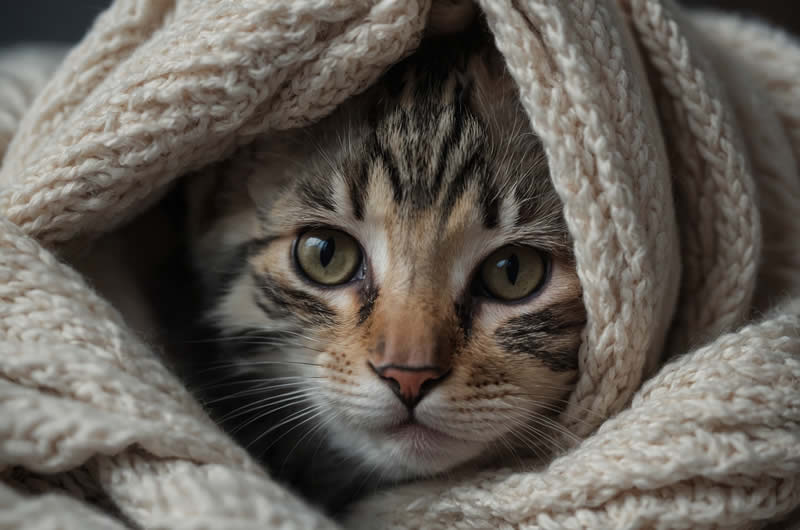
Remove any remaining substance or packaging so your pet can’t ingest more. Keep them warm and comfortable, particularly if they are small, keep them wrapped in blankets, as their body temperature can drop and cause hypothermia.
One very important point – please do not try to make your pet vomit. This can lead to serious complications, especially if material is inhaled into the airway and lungs.
Most importantly, contact your veterinarian as soon as possible. And be honest about what may have happened. Our priority is your pet’s health – not judgement.
When it becomes an emergency
There are times when I would strongly advise immediate veterinary attention. Please bring your pet in without delay if they:
- Cannot stand or keep falling over
- Are extremely lethargic or unresponsive
- Experience tremors or seizures
- Vomit repeatedly
- Have eaten edibles such as brownies or gummies
- Are very small, elderly, or have existing health conditions
In the clinic, we monitor vital signs like heart rate and blood pressure. Many pets require supportive care, including and IV drip to maintain hydration and help the kidneys flush out the toxin.
In more severe life-threatening cases, specialised Intravenous Lipid Emulsion therapy may be used to help remove THC from the system more rapidly.

Why edibles are especially dangerous
Edibles are one of my biggest concerns when it comes to cannabis exposure in pets.
They often contain high concentrations of THC, and unlike humans, pets don’t consume these in moderation – they tend to eat everything they can access. Puppies will gulp down a whole stash of gummies or brownies.
Are CBC/CBD pet products safe?
This is something I’m often asked about. While some pet owners use cannabis or CBC/CBD-type products for anxiety or pain, these are not well-regulated in South Africa. That means they may contain unsafe levels of THC or other harmful ingredients. My advice is always to consult your veterinarian and only use products that are specifically approved for veterinary use.
How to keep your pet safe
Prevention is always better than treatment. A few simple precautions can go a long way:
Store all cannabis products including vape pens – whether medicinal or recreational – securely and out of reach of your pet. Dispose of leftovers and joint butts in sealed bins. If you grow marijuana at home, ensure the area is inaccessible to pets. Never assume that a ‘natural’ product is safe for pets.
Also be mindful of visitors’ belongings, and avoid exposing your pets to second-hand smoke or vapour which may cause disorientation or respiratory distress.
Final thoughts
If you take one thing away from this, let it be this: if you suspect your pet has ingested something toxic, don’t wait. Contact your veterinarian immediately.
In many cases, a quick response is the difference between a speedy recovery and a tragic loss.
As vets, we’re here to help you and your pets through situations like this. And with a little awareness and prevention, many of these incidents can be avoided altogether.
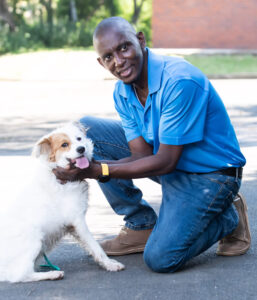 Dr Gilson Muchopa has been in practise for 22 years – the past 12 of which he has served as Controlling Veterinarian at the Durban & Coast SPCA.
Watch this space for more tips from Dr G. If you have specific questions for our vet, please email marketing@spcadbn.org.za
share this on social media


STAY INFORMED
Sign up here for the latest animal ‘mews’ – delivered straight to your mailbox!
YOU MAY ALSO ENJOY
Why is my dog vomiting? Dr Gilson explains when to worry and when to see a vet
Why is my dog vomiting? Dr Gilson explains when to worry and when to see a vet As a veterinarian, vomiting is one of the most common reasons I see dogs brought into the clinic. Sometimes it's something relatively minor that resolves on its own. But at other times, it...
Snakes in the city – why you shouldn’t kill them, and how to keep your pets safe
Snakes in the city – why you shouldn’t kill them, and how to keep your pets safe Summer time is snake time in Durban. Rain and warm weather – along with a plentiful supply of skinks, geckos and frogs – bring snakes out of their hiding places to bask in the sun and...
Why your application to adopt an animal from us might be turned down – and why it’s okay
Why your application to adopt an animal from us might be turned down – and why it’s okay At the Durban & Coast SPCA, we believe every animal deserves a second chance – a chance at a safe, loving, and permanent home. So, it’s no surprise that many people assume...

Monkeys matter – how to co-exist peacefully with our wildlife
Monkeys matter - how to co-exist peacefully with our wildlife In Durban and surrounding areas, vervet monkeys are a familiar sight. While some residents enjoy watching their antics, others see them as a nuisance – especially when they invade homes, raid...
Surrendering a pet to the SPCA: what you need to know
Surrendering a pet to the SPCA: what you need to know Surrendering a pet is never an easy decision. At the Durban & Coast SPCA, we understand that circumstances can change, making it difficult for some pet owners to continue caring for their animals....

Pet euthanasia at the SPCA – the difficult choice
Pet euthanasia at the SPCA - the difficult choice Euthanasia is one of the most heartbreaking but necessary responsibilities of the Durban & Coast SPCA. No one wants to put a healthy animal to sleep. But the pet overpopulation, coupled with a shortage of...
Pet-friendly holidays in Durban: where to stay, play and dine with your furry friend
Pet-friendly holidays in Durban: where to stay, play and dine with your furry friend Durban, with its warm climate and scenic coastline, is a fantastic destination for petlovers. If you’re planning a summer holiday at the beach, you’ll find plenty of placesthat...
Hardy, healthy cross-breeds rule!
Hardy, healthy cross-breeds rule! Cross-breeds … mongrels … mutts – dogs with mixed parentage are universally seen as far less desirable and valued than purebred dogs. And yet, they can be just as loveable, friendly and loyal, with none of the health issues...
Why does the SPCA charge an adoption fee?
Why does the SPCA charge an adoption fee? Adopting a pet from an animal shelter is one of the most rewarding decisions you can make. Apart from acquiring a new furry friend, you have the satisfaction of knowing you’ve saved their life and given them a second...
Vaccination schedule for puppies and kittens
Vaccination schedule for puppies and kittens Vaccinations are crucial to protect pets against serious diseases, some of which can be transferred to humans. And when it comes to vaccinating your pets against these diseases, it’s a case of the sooner the better!...